
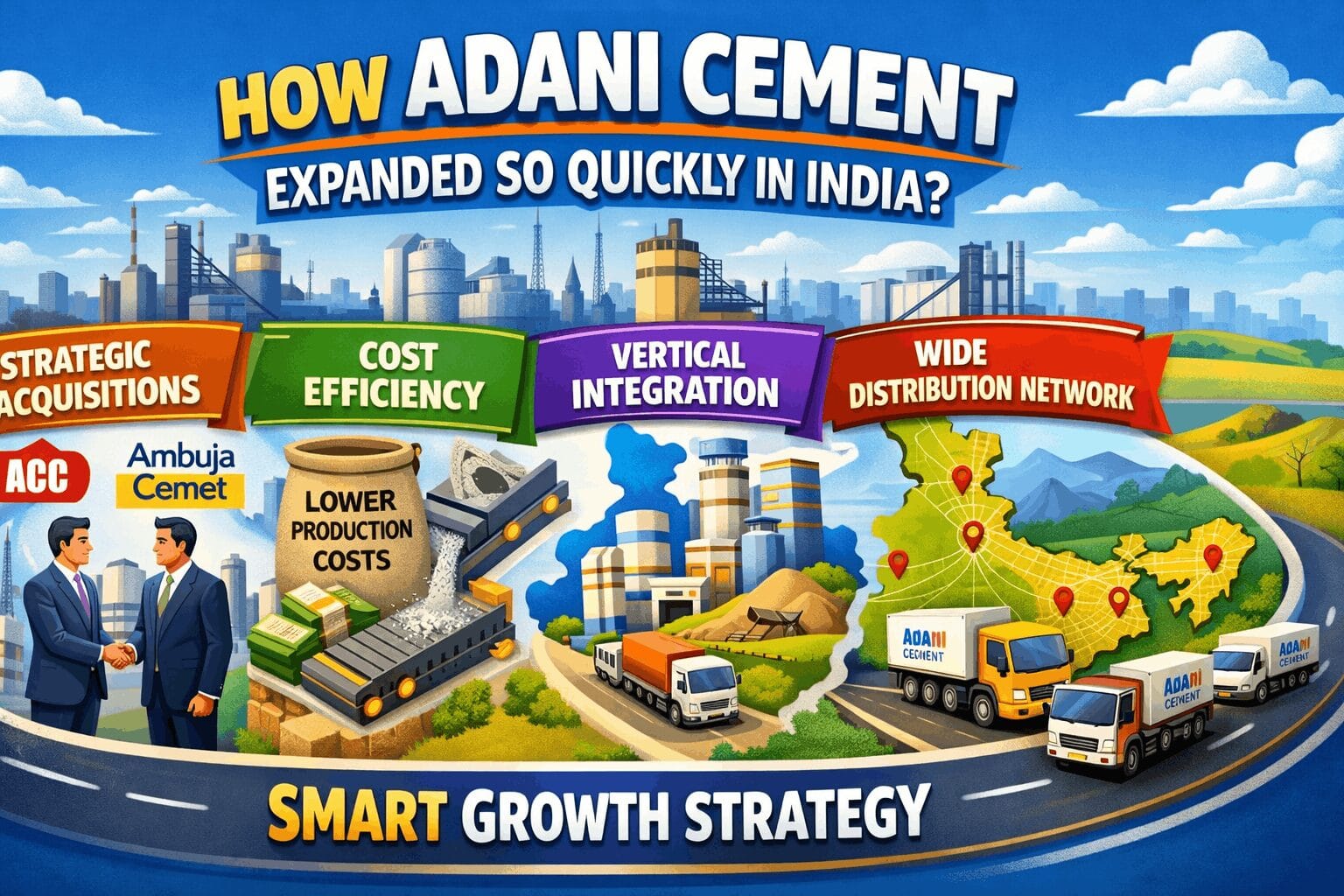
long story short
Table of Contents
Adani Cement ki kahani ek classic “inorganic growth on steroids” ki story hai. Isko samajhne ke liye hume thoda peeche jaana padega.
Pehle, ek zaroori context
Adani Group ka cement business originally kuch khaas nahi tha. Unke paas Adani Cementation naam ki ek chhoti si company thi — basically nobody. Toh phir aisa kya hua ki aaj ye India ka #2 cement producer ban gaya? Iska jawab hai ek masterstroke acquisition.
The Big Bang — 2022 ka Holcim Deal
2022 me, Swiss giant Holcim ne decide kiya ki wo apna India business bechna chahta hai. Unke paas do massive brands the — ACC aur Ambuja Cements. Ye dono companies milke India me decades se kaam kar rahi thi, aur inki combined capacity thi ~67 million tonnes per annum (MTPA).
Adani ne $10.5 billion — yaani roughly ₹81,000 crore — me ye deal close ki. Ek jhatke me, bina ek single factory banaye, Adani India ka second-largest cement producer ban gaya.
Socho iska logic — agar tum ground-up ek 67 MTPA capacity banao, toh tumhe shayad 15-20 saal lagenge, environmental clearances leni hongi, land acquire karna hoga, brand build karna hoga. Adani ne ye sab ek cheque se skip kar diya. Ye hai inorganic scaling ka power.
Business Model ke Teen Pillars
Pillar 1 — “Ecosystem Leverage” (Ye Adani ka sabse bada secret weapon hai)
Adani Group ek cement company nahi hai — wo ek integrated infrastructure empire hai. Unke paas ports he (Mundra, India ka largest private port), power plants he, railways he, logistics he. Toh jab Adani cement banata hai, uska cost structure fundamentally alag hota hai competitors se.
Socho aise — ek normal cement company ko coal bahar se kharidni padti hai, usse port se third-party logistics ke through mangwana padta hai, phir rail/road se factory pohonchana padta hai. Har step pe margin dena padta hai kisi aur ko.
Adani ke liye? Coal import karo apne Mundra Port se, apni Adani Logistics se transport karo, apni Adani Power se cheap electricity lo. Ye captive ecosystem unhe per-tonne me competitors ke comparison me kaafi cheaper operations deta hai. Economists iska naam dete he vertical integration — lekin Adani ne ise ek poori economy ka scale de diya hai.
Pillar 2 — Capacity Expansion ka “Brownfield + Greenfield” Double Engine
Acquisition ke baad Adani ruka nahi. Unhone ek aggressive expansion blueprint announce kiya — 2028 tak 140 MTPA capacity ka target. Abhi wo roughly 89-90 MTPA ke aas paas he.
Is expansion me do tarike use ho rahe he. Brownfield expansion matlab existing ACC aur Ambuja plants ko debottleneck karo, nayi kilns lagao, grinding units badao — ye faster aur cheaper hota hai kyunki zameen, permissions, workforce sab already exist karti hai. Greenfield expansion matlab bilkul nayi locations pe naye plants — ye slower hai lekin new geographies cover karne ke liye zaroori hai, especially East India aur South India me jahan Adani abhi relatively weak hai.
Pillar 3 — Premiumisation Strategy
Ye thoda counterintuitive lagta hai — ek naya player hai, toh usse toh price war karni chahiye na? Lekin Adani ne ulta kiya.
Unhone Ambuja brand ko premium positioning di aur ACC ko mass-market me rakha. Iska matlab ek hi company ke do brands he jo alag-alag customer segments target kar rahe he — ghar banane wale individual consumers ke liye Ambuja, aur infrastructure projects ke liye ACC. Is dual-brand strategy se unka blended realization (yaani average price per tonne) kaafi healthy rehta hai.
Financing ka Jugaad — Kaise afford kiya itna sab?
$10.5 billion ek insane raqam hai. Adani ne ispe heavily debt finance kiya, lekin unka thesis clear tha — cement ek cash-generative business hai. Log hamesha ghar banate rahenge, infrastructure hamesha build hoti rahegi. Toh loan repayment ke liye cash flow predictable hai.
Iske alawa, Gautam Adani ke family office ne significant equity infuse ki, aur international institutional investors ko bhi rakha gaya. 2023 me Hindenburg Report ke baad jab group pe pressure aaya, tab bhi cement business relatively stable raha kyunki ye real assets he — factories, plants — speculative nahi.
Ek Honest Critique Bhi
Itni speed me expansion hamesha risk-free nahi hoti. Adani Cement ke saamne kuch genuine challenges he. Integration complexity ek real problem hai — ACC aur Ambuja ki alag cultures, alag IT systems, alag management teams — inhe ek cohesive entity banana aasaan nahi. Phir debt burden abhi bhi significant hai. Aur overcapacity risk — India me almost sabhi cement companies expand kar rahi he, toh agar demand growth slow hua, toh pricing pressure aa sakti hai industry-wide.
The Bigger Picture — Ye sirf cement nahi hai
Adani Cement ko sirf cement company samajhna galat hoga. Ye actually ek “India Infrastructure Bet” hai. Adani ka thesis ye hai ki India ke paas $1.4 trillion ka infrastructure pipeline hai — roads, airports, railways, housing. Ye sab concrete se banenge. Jo cement ka king banega, wo is entire cycle se benefit utha payega.
Is lens se dekho toh $10.5 billion ek cement deal nahi thi — wo ek long-term positioning move thi India ki growth story pe. Aur abhi tak, wo bet kafi sahi direction me ja rahi hai.
agar tum goutam adani ke business expansion ke style se impress ho gaye ho to tumhe unke baare me likhi gayi ye kitaab jaroor padhni chahiye jisme isse bhi badi seekh likhi gayi he : Gautam Adani: A Complete Biography
also read :